


Fitted Furniture: An Architectural Approach to Bespoke Spatial Design

A home’s true elegance isn’t found in the objects it contains, but in the intentional dialogue between its walls and the furniture that inhabits them. You’ve likely felt the frustration of generic, one-size-fits-all modular systems that fail to respect the unique proportions of a period terrace or a sharp modern build. It’s a common struggle to find a balance between utility and architectural integrity, especially when expert guidance is missing during the conceptualisation phase. By viewing fitted furniture as an architectural extension rather than a series of boxes, we can move beyond the limitations of predefined options to create something truly bespoke.
This article explores how an interpretive design philosophy transforms functional storage into a singular spatial work. We’ll examine the pursuit of refined detail through materiality and tactile harmony, ensuring that every joint and transition is deliberate. You’ll learn how a home environment, whether it’s a bespoke kitchen or a sophisticated home office, can transcend its primary function. By the end, you’ll understand how intentional design sensitivity ensures that your daily use is quietly elevated through pieces that are built to last a lifetime.
Key Takeaways
Shift your perspective from mere organisation to the creation of a singular spatial work that integrates with your home's architecture.
Learn how material honesty and deliberate junctions create a sense of tactile harmony in every bespoke installation.
Discover the difference between filling a gap and enhancing a layout through high-end fitted furniture designed for your specific proportions.
Understand the critical role of the interpretive consultation phase in moving from a loose concept to a refined architectural plan.
Realise how your daily environment is transformed when functional storage acts as an intentional expression of authorship.
Table of Contents
Beyond Utility: The Architectural Philosophy of Fitted Furniture
Materiality and Proportion: The Components of Bespoke Artistry
Interpreting Space: Why Refined Detail Transcends Standardised Systems
The Design Consultation: Planning Your Singular Spatial Work
Elevating Daily Life: The Neil Norton Approach to Fitted Furniture
Beyond Utility: The Architectural Philosophy of Fitted Furniture
To view a home as a collection of separate storage units is to overlook the profound potential of its interior architecture. True fitted furniture transcends the role of a mere organisational tool; it becomes an intentional extension of the building’s shell. When design is approached with this level of sensitivity, cabinetry and surfaces are no longer incidental additions. They are transformed into a singular spatial work where every line and junction is deliberate. This philosophy of bespoke authorship distinguishes a tailored residence from one filled with standardised solutions. It ensures that the experience of daily use is quietly elevated through a deep understanding of proportion and materiality. We don't just fill gaps; we interpret the space to find a balance between form and function that feels inevitable.
The Rejection of Predefined Options
Modular systems often fail because they impose a rigid, external logic on a room's unique architectural language. They rely on "off-the-shelf" components that cannot adapt to the subtle nuances of period features or the precise requirements of modern builds. An interpretive approach is essential for successful residential interior projects. This method allows the designer to treat the room as a canvas, where the Architectural Integration of Furniture creates a seamless transition between the fixed structure and the functional elements. By rejecting the limitations of predefined options, we allow the space to breathe and function in a way that feels entirely natural. This sensitivity to the environment ensures that the final result is not just a product, but a permanent enhancement of the home’s value and character.
Designing for Longevity and Classic Appeal
In 2026, the shift away from fleeting aesthetic trends towards enduring quality has never been more pronounced. Clients are increasingly seeking designs that prioritise timelessness and material honesty. Neil Norton Design remains committed to the belief that a well-crafted piece should last a lifetime. This longevity is achieved through a meticulous pursuit of refined detail and the rejection of mass-produced shortcuts. Whether it is a bespoke kitchen, a sophisticated home office, or custom-made wardrobes, the focus remains on creating a classic appeal that transcends the incidental. It is about building a legacy of craftsmanship that respects both the heritage of the property and the modern lifestyle of the homeowner. We believe that true luxury lies in the quiet confidence of furniture that performs perfectly and ages gracefully, becoming an inseparable part of the home’s story.
Materiality and Proportion: The Components of Bespoke Artistry
Every surface within a home carries a weight that is both sensory and intellectual. This is the essence of materiality. In the creation of high-end fitted furniture, the choice of a surface isn't merely about colour or texture; it's about how that material interacts with light and touch over decades. We strive for a tactile harmony where nothing is incidental. Every line, joint, and transition is deliberate, ensuring a cohesive aesthetic that resonates with the building's soul. When these elements are handled with design sensitivity, the result is a singular spatial work that feels as though it was grown from the floorboards rather than placed upon them.
Material Honesty in Bespoke Design
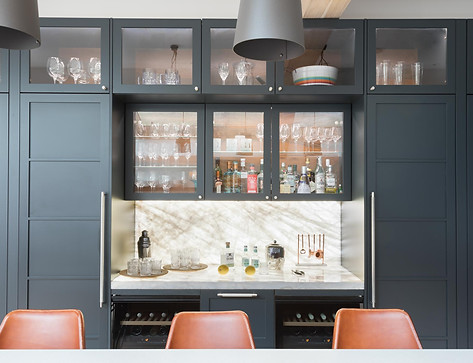
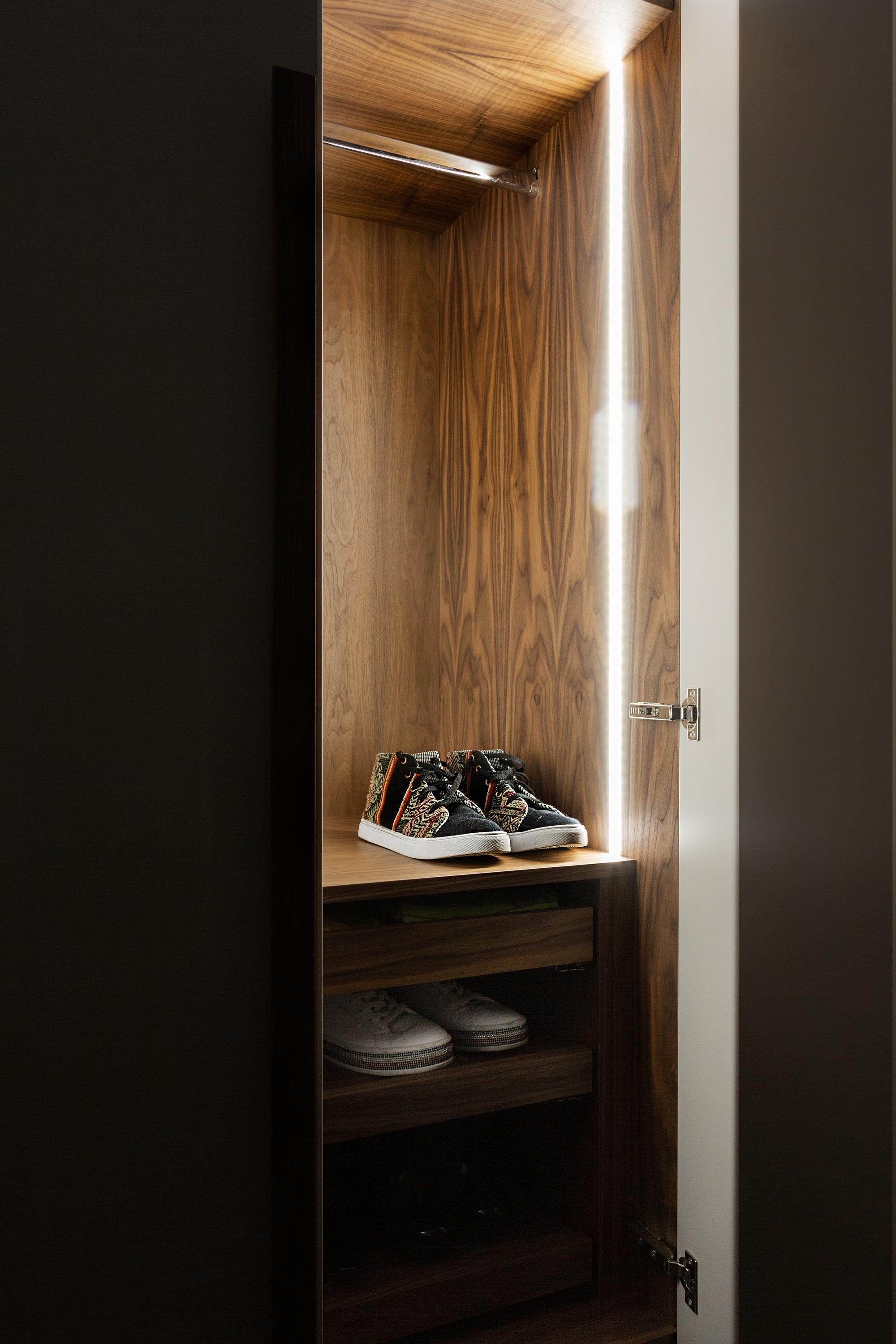
True luxury rejects the synthetic. We prioritise material honesty by selecting authentic timbers, stones, and metals that age with grace. A solid oak interior or a hand-honed marble splashback communicates a quality that mass-produced alternatives simply can't replicate. Each component is a deliberate part of the whole. This commitment to authenticity ensures that your home office or bespoke bar feels grounded and permanent. It's about the pursuit of refined detail that stands up to close inspection. Many global standards, such as those outlined in the North American Architectural Woodwork Standards, provide a framework for this level of precision, though our artisan approach often exceeds these industrial benchmarks to achieve a truly unique finish.
The Language of Proportion
Proportion is the silent director of spatial experience. It dictates the visual weight and balance of a room. When we design cabinetry, we don't just look at the available floor space; we balance the height and depth with existing architectural features like cornicing or window reveals. Furniture can be a powerful tool to correct or enhance spatial irregularities. A tall wardrobe might draw the eye upward to celebrate a high ceiling, whilst a low-slung AV cabinet can ground a modern living area. This requires mathematical precision for a truly bespoke fit. It’s this rigorous attention to scale that allows a room to transcend its basic function. If you're ready to see how these principles can transform your own living space, the journey begins with an appreciation for the fine balance between the built environment and the objects within it. We don't just build storage; we compose environments where daily use is quietly elevated through intentional design.
Interpreting Space: Why Refined Detail Transcends Standardised Systems
A space truly breathes when its components are in total alignment with its boundaries. Design sensitivity is the catalyst that allows an environment to transcend its basic function. Standardised systems focus on volume, but true fitted furniture focuses on the enhancement of a spatial layout. In a Neil Norton Design consultation, nothing is incidental. We examine the interplay between light, movement, and the existing architectural shell. This is particularly vital when navigating the idiosyncrasies of London period homes, where walls are rarely straight and alcoves demand a bespoke response. Similarly, modern developments across London often require a different architectural language, one that respects expansive glazing and contemporary proportions. We don't just fill gaps; we compose environments.
Bespoke Authorship vs. Modular Modularity
Modular systems rely on predefined increments that often force compromises in the pursuit of storage. These tools lack the interpretive depth required to identify opportunities for artistic expression. They operate on a logic of 300mm or 600mm units, which inevitably leaves awkward gaps or clunky infill panels. Bespoke authorship, by contrast, treats the project as a singular spatial work. We don't see a void to be filled; we see a transition to be managed. This interpretive phase ensures that every piece of furniture feels like a permanent, structural part of the building. It’s the difference between an object that sits in a room and an environment that is defined by its furniture. A professional consultation identifies these nuances, turning a functional requirement into a moment of design excellence.
Refined Detail in Junctions and Transitions
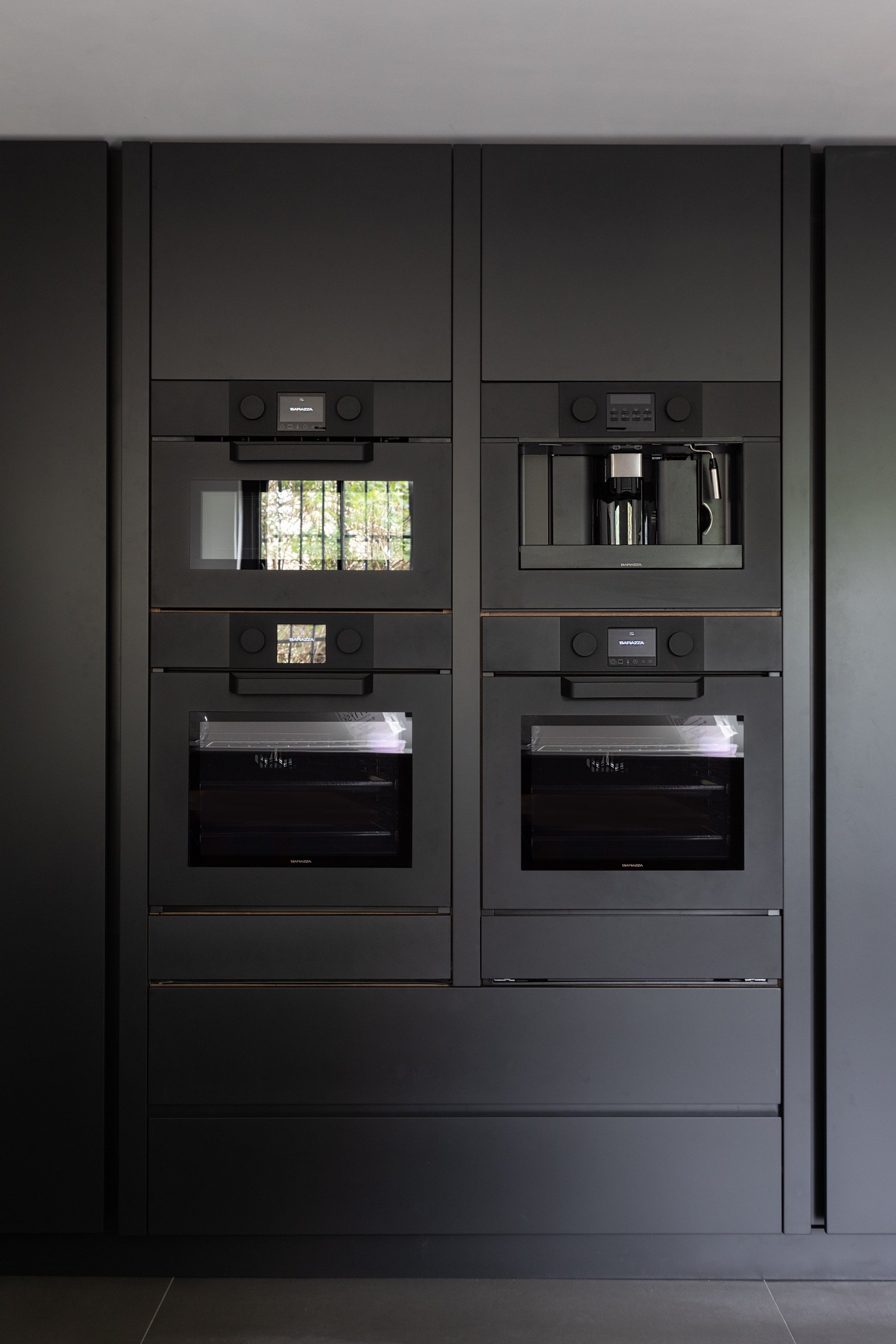
The success of an installation is found in how furniture meets the floor, wall, and ceiling. Mass-market solutions often look "boxed-in" because they use generic trims to hide the reality of a house's movement. We avoid this by ensuring every junction is deliberate and every transition is seamless. This level of refined detail is essential when integrating bespoke dressing room ideas into a wider master suite. The furniture should flow naturally between spaces, maintaining a consistent architectural language that links the bedroom to the dressing area. Whether we are designing a home office or a bespoke bar, the goal is to create a cohesive whole. By focusing on the pursuit of refined detail, we ensure that daily use is quietly elevated and the furniture becomes an expression of authorship within the home.
The Design Consultation: Planning Your Singular Spatial Work
The design consultation is the most critical interpretive phase of any project. It's where a loose concept begins its transformation into a refined architectural plan. Unlike mass-market "design visits" that function primarily as sales pitches, a Neil Norton Design session is a collaborative exploration of a home's potential. The designer acts as a trusted advisor and artistic catalyst, translating your lifestyle needs into a cohesive spatial vision. This stage is about more than just measurements; it's about understanding how you inhabit your home and identifying the aesthetic preferences that will define the project.
Preparing for this session requires a thoughtful look at your daily routines. Consider the objects you use and the atmosphere you wish to cultivate. By the time the consultation begins, the goal is to have a clear sense of purpose for each piece of fitted furniture. This clarity allows the designer to move beyond the superficial and focus on the pursuit of refined detail that makes a bespoke installation truly singular. It's a process of narrowing down vast possibilities into a single, intentional direction that respects the existing architectural language of your property.
Conceptualising the Layout
Designing a layout is a rigorous analysis of flow and light. We examine how movement occurs within the room and how natural light interacts with different surfaces throughout the day. This dictates the optimal placement for bespoke cabinetry, shelving, or an AV cabinet. Nothing is incidental in this process. The design must support your intended behaviour within the space, ensuring that a home office facilitates focus whilst a bespoke bar encourages social connection. It’s a balance of technical precision and artistic intuition that avoids the pitfalls of modular systems.
Selecting the Material Palette
The choice of materials is where tactile harmony is established. We select colours and textures that don't just match but complement the existing interior architecture. Understanding the impact of different finishes in daily use is vital. A timber veneer might offer warmth in a bedroom, whilst a stone surface provides durability in a kitchen. For those specifically looking at bedroom storage, our process for a fitted wardrobe design consultation London ensures that materiality and proportion are perfectly aligned. This holistic approach ensures that every component is a deliberate part of the whole.
If you're ready to begin your journey toward a home that reflects your unique authorship, book a professional consultation with our design team today.
Elevating Daily Life: The Neil Norton Approach to Fitted Furniture
A home's true value isn't measured in square footage but in the quality of the moments it facilitates. When fitted furniture is designed with an architectural eye, it does more than hold objects; it removes the friction of daily existence. This subtle elevation of the domestic experience is the hallmark of a space where nothing is incidental. We've seen this transformation in the homes of over 200 happy clients who chose to move beyond the limitations of mass-market retail. By prioritising material honesty and classic design that lasts a lifetime, we ensure that your environment remains a source of pride for decades.
The transition from functional storage to a true expression of authorship is what distinguishes our work. It's about creating a narrative within the home. Whether it's the quiet precision of a bespoke kitchen or the focused atmosphere of a custom home office, the furniture becomes a catalyst for lifestyle improvement. This isn't just about organisation. It's about the security and comfort that comes from knowing every component was crafted specifically for you. We celebrate the legacy of high-end craftsmanship, ensuring that every project reflects the unique personality of the homeowner whilst respecting the building's heritage.
A Personal and Artistic Approach
Our identity is rooted in a distinct geographic pairing of London and Ireland, with our heart in Wimbledon. This dual presence allows us to bring a broad operational scale to our projects whilst maintaining the intimacy of an artisan studio. Every consultation is a deliberate rejection of standardised, modular systems. We don't believe in "one-size-fits-all" because no two homes share the same soul. Our award-winning status is a testament to this quiet confidence. It's a commitment to a process where the designer and client collaborate to find a bespoke solution that simply cannot be found in a catalogue. This personal touch ensures that the final result is as functional as it is beautiful.
Transforming Residential Interiors
Our expertise extends across the entire domestic landscape, from bespoke kitchens and home offices to wardrobes, bars, and AV cabinets. Each of these elements plays a vital role in the architectural language of the house. Design sensitivity doesn't just improve your daily mood; it has a tangible impact on the long-term value of your property. A home that features intentional, singular spatial works is always more desirable than one filled with temporary fixes. Taking the first step toward a more intentional living space is an investment in your future. It's an invitation to transform your home into a sanctuary of refined detail and enduring quality. We invite you to explore the possibilities of a home where every line, joint, and transition is a deliberate act of design.
Create Your Singular Spatial Work
A home truly flourishes when its interior elements are in total dialogue with its architectural shell. You've discovered how the pursuit of refined detail and material honesty can transform functional storage into an expression of authorship. By rejecting the limitations of predefined modular systems, you allow for a level of design sensitivity that elevates the sensory and intellectual experience of your space. This approach ensures that every line and junction is intentional, creating a sense of tactile harmony that lasts a lifetime.
Neil Norton Design is an award-winning studio that has successfully navigated projects for over 200 happy clients across London and Ireland. We specialise in the architectural planning of bespoke fitted furniture, acting as an artistic catalyst to bring your vision to life. Whether you're planning a sophisticated home office or a classic kitchen, we're here to guide you through the interpretive phase of your project. We invite you to take the first step toward a home that reflects your unique lifestyle and aesthetic standards.
Transform your home with a professional design consultation
Frequently Asked Questions
What distinguishes bespoke fitted furniture from modular systems in 2026?
Bespoke design is defined by its total architectural integration and the rejection of predefined increments. Whilst modular systems rely on standardised units that often leave awkward gaps, bespoke solutions are interpretive works that adapt perfectly to the unique shell of a building. This distinction ensures a seamless fit that respects the property's original character and provides a level of authorship that mass-market systems cannot replicate.
How does the architectural language of a room influence furniture design?
The architectural language acts as the primary blueprint for every line, joint, and transition within the design. It dictates the stylistic direction, whether that involves mirroring the intricate mouldings of a Victorian terrace or the minimalist geometry of a modern build. By observing these cues, the furniture becomes a deliberate extension of the room's existing identity, ensuring that nothing feels incidental or out of place.
Why is materiality so important when selecting custom cabinetry?
Materiality defines the sensory and intellectual experience of a space through the honest use of authentic surfaces. Selecting high-quality timbers, stones, or metals ensures that the cabinetry ages with grace and maintains its structural integrity over time. This focus on material honesty creates a sense of permanence and tactile harmony that synthetic, trend-led alternatives simply cannot provide in a high-end home.
Can fitted furniture be designed to suit both period and contemporary homes?
Yes, fitted furniture is inherently versatile because it is designed from a blank canvas to suit any architectural era. For period homes, the design might focus on traditional proportions and heritage finishes that complement original features. In contemporary settings, the emphasis shifts toward handleless systems and clean, architectural lines that enhance the sense of space and light within a modern residential layout.
What should I expect during a professional design consultation for fitted furniture?
You should expect a collaborative, interpretive session that focuses on lifestyle analysis rather than a simple sales pitch. The designer acts as a trusted advisor, evaluating how light and movement flow through your space to identify opportunities for artistic expression. This process moves from a broad conceptual vision to a refined architectural plan that supports your daily behaviour and elevates your home environment.
How do you ensure that bespoke furniture remains classic whilst trends change?
We ensure longevity by prioritising timeless proportions and material honesty over fleeting aesthetic fads. By focusing on the pursuit of refined detail and classic craftsmanship, the design avoids the dated look often associated with trend-led furniture. A well-executed bespoke piece is intended to be a permanent fixture that lasts a lifetime, maintaining its elegance as the rest of the interior evolves.
What is the role of tactile harmony in a residential interior project?
Tactile harmony is the sensory balance achieved when different materials and finishes work together as a cohesive whole. It ensures that the physical experience of interacting with a surface is as refined as the visual appeal. This harmony is essential for creating a home environment that feels both exclusive and deeply personal, where every touchpoint reinforces the sense of quality and craftsmanship.
Why is proportion considered the most critical element in fitted furniture design?
Proportion dictates the visual weight and balance of a room, ensuring that fitted furniture doesn't overwhelm or under-serve the available space. It involves a mathematical precision that aligns the height and depth of cabinetry with existing features like ceiling heights and window reveals. Getting the proportion right is what allows a piece to feel truly integrated, transforming it into a singular spatial work.
Comments