How to Plan a Kitchen Renovation in the UK: An Architectural Approach to Bespoke Design
- Neil Norton Design

- Jun 21
- 11 min read
Updated: 7 hours ago
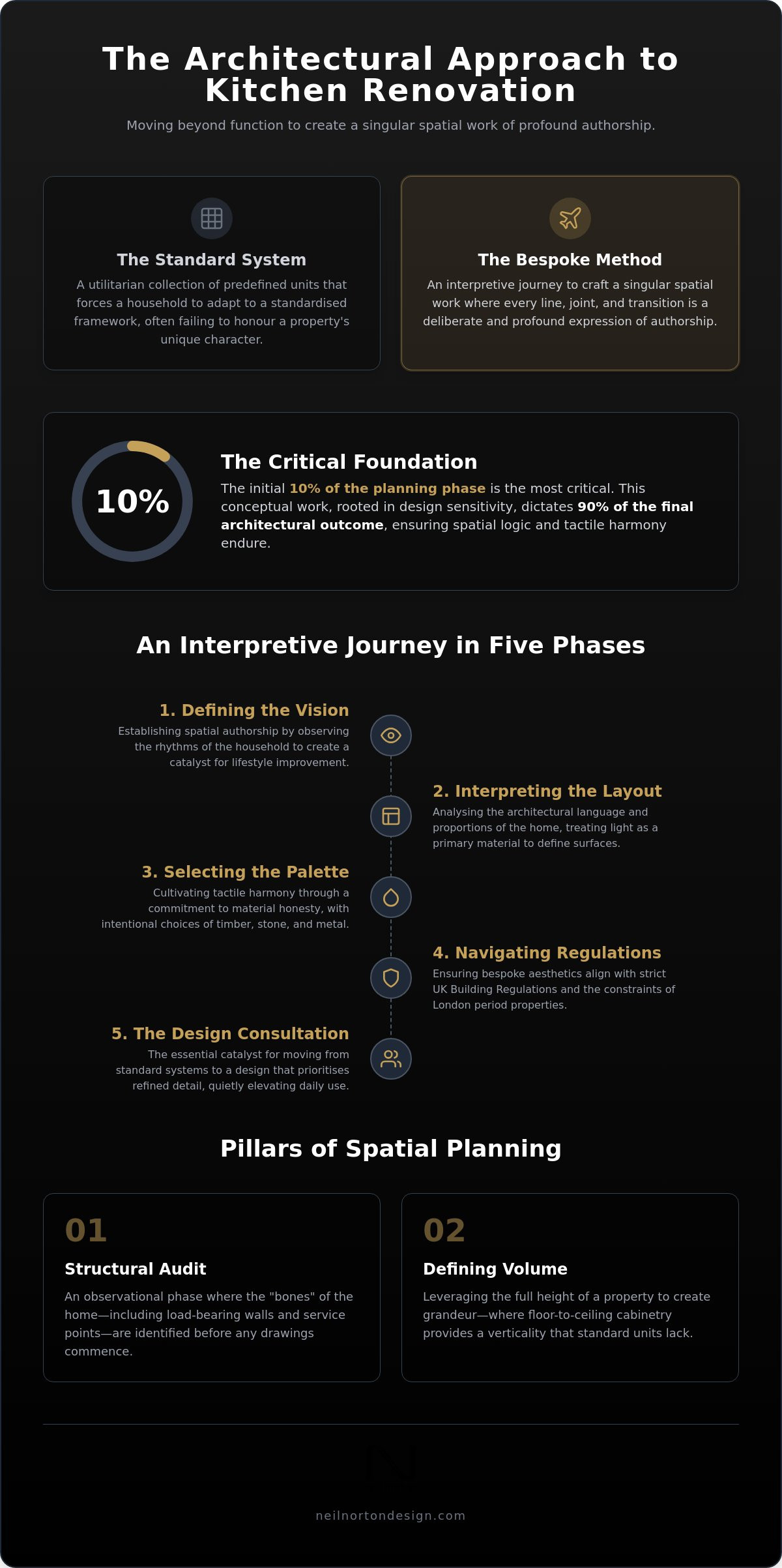
A truly bespoke kitchen is not merely a collection of units; it is a singular spatial work that demands a rigorous architectural perspective. Discerning homeowners often face the burden of over-choice when presented with predefined systems that fail to honour the unique character of a period home or the specific proportions of a room. Mastering how to plan a kitchen renovation UK projects require involves moving beyond superficial aesthetics to embrace intentional materiality and technical precision—an approach where nothing is incidental and every line, joint, and transition is deliberate.
This guide explores the sophisticated process of creating a kitchen that transcends function, ensuring a seamless transition between the culinary environment and the wider home architecture through design sensitivity and a mastery of UK building regulations. By moving from a systematic to an interpretive mindset, the kitchen becomes a quiet elevation of daily use and a profound expression of authorship. From conceptual architectural language to the final selection of authentic materials, the planning process serves as the essential catalyst for transforming a domestic space into a work of art.
Table of Contents
Defining the Vision: Beyond Function to Spatial Authorship
A kitchen often exists as a mere utilitarian box—a narrow view that fails to capture the soul of a residence. A bespoke kitchen acts as a catalyst for lifestyle improvement where daily use is quietly elevated through design sensitivity. When considering how to plan a kitchen renovation UK projects of this calibre require, the process is best approached as the creation of a singular spatial work. This perspective requires moving beyond the showroom floor to view the room as a profound expression of authorship.
Intentionality remains the core of this philosophy—the rejection of predefined options that force a household to adapt to a standardised system. The pursuit of refined detail begins with observing the specific rhythms of the household—how guests are hosted within a London period home or how morning light falls across a breakfast bar. These observations dictate the architectural vision. Every line, joint, and transition is deliberate; nothing is incidental. By focusing on the intellectual and sensory experience of the space, the final result transcends mere function to become a work of art.
The Interpretive Process of Planning
Designing a high-end kitchen is an interpretive journey—moving from a simple list of appliances to a deep exploration of how one wishes to feel within the space. It is not a matter of picking cabinets but of crafting a cohesive environment where every element serves a purpose. The first 10% of the planning phase remains the most critical—this initial conceptual work dictates 90% of the architectural outcome. If the foundation is weak, the final result lacks the tactile harmony required for a luxury finish; a meticulous start ensures the spatial logic holds true throughout the build.
Establishing Design Sensitivity
High-end design requires a balance of professional authority and aspirational warmth. The kitchen should never exist as an island of style in a sea of differing aesthetics—it must be a cohesive part of the wider residential interior. This involves establishing a sense of material honesty where timber, stone, and metal create a space that feels authentic and enduring. Consideration of the kitchen work triangle facilitates movement without disrupting the visual flow of the room. When one understands how to plan a kitchen renovation UK homes truly benefit from, every component becomes part of a larger, intentional narrative—a story of craftsmanship that lasts a lifetime.
Interpreting the Layout: Proportions and Architectural Language
Successful execution of how to plan a kitchen renovation UK homeowners find enduring begins with a rigorous analysis of the existing structure—the architectural language of the building itself. In London period homes, this often involves interpreting features like ornate cornicing or high ceilings to ensure the new volume respects the heritage of the space. Proportions are far more vital than raw square footage; a well-scaled layout creates an expansive feeling that a larger, poorly considered extension simply cannot replicate. The placement of every element must be deliberate to honour the original scale of the property.
The deliberate placement of junctions and transitions serves to create a sense of flow—an intentional movement that guides the inhabitant through the room. Light is treated as a primary material during this stage, defining the depth of surfaces and the warmth of the environment. Whilst technical baselines are found in the Welsh Government building regulations, the architectural success of the room depends on its relationship with the wider house. For those seeking a space that reflects a clear vision, the portfolios at Neil Norton Design demonstrate how these spatial principles are applied in practice.
The Five Pillars of Spatial Planning
Structural Audit: An observational phase where the "bones" of the home—including load-bearing walls and service points—are identified before any drawings commence.
Defining Volume: The height of a property is leveraged to create grandeur—where floor-to-ceiling cabinetry in a Victorian terrace provides a verticality that standard units lack.
Circulation Paths: Movement through the room is treated as a fluid journey—ensuring that nothing is incidental and every path remains unobstructed and intentional.
Zone Authorship: The dedication of specific areas to preparation, socialising, and repose—preventing the kitchen from feeling like a cluttered workshop and maintaining its status as a living space.
The Relationship Between Furniture and Architecture
Cabinetry is viewed as an integrated architectural component rather than "fitted furniture"—an extension of the wall that creates a quiet, permanent authority in the room. This interpretive bespoke kitchen design transcends standard systems by rejecting predefined options in favour of custom-scaled volumes. In a well-planned space, the furniture creates natural pauses—focal points where the pursuit of refined detail is most evident. The result is a cohesive whole where every joint and transition serves to complete the architecture of the wider home.
Materiality and Tactile Harmony: Selecting the Palette
The selection of materials is an interpretive exercise in tactile harmony. It moves beyond the superficial choice of colours to explore how surfaces respond to touch and light. In high-end design, we prioritise material honesty. This is the use of authentic timber, stone, and metal that age gracefully and possess a permanent value. Whilst mass-market guides often focus on easy-clean surfaces, a bespoke approach seeks materials that endure. When you consider how to plan a kitchen renovation UK projects of this calibre require, the goal is to create a space that transcends function to become a sensory experience. Every joint, line, and transition must be deliberate. Nothing is incidental.
Tactile harmony is achieved through the intentional juxtaposition of varied textures. The cool, honed surface of a marble splashback provides a counterpoint to the warmth of a hand-finished oak cabinet. These interactions define the architectural character of the room. It's vital to remember that material choices often carry technical implications. If your vision involves significant structural support for heavy stone or new drainage routes, you should consult the UK building regulations for kitchens to ensure compliance from the outset. This ensures your aesthetic desires remain synchronised with technical constraints.
The Lexicon of Luxury Materials
Bespoke cabinetry is the foundation of the kitchen. Unlike mass-produced units, custom-made joinery is designed to fit the specific proportions of your home perfectly. Stone work surfaces should be selected for their ability to last a lifetime. Natural quartzites and granites offer a unique authorship that synthetic alternatives cannot replicate. Metalwork and hardware act as the refined detail that elevates daily use. A solid brass handle or a hand-patinated copper tap provides a moment of tactile pleasure every time it's used. These components are not mere accessories; they are essential elements of the architectural whole.
The Integrity of Craftsmanship
The creation of a singular spatial work requires the steady hand of master artisans. This is why luxury kitchen design rejects fleeting trends. We favour classic design that respects the heritage of the building whilst providing a modern lifestyle. Craftsmanship is about the pursuit of refined detail in every corner of the room. It ensures that the cabinetry doesn't just look beautiful but functions with precision for decades. By integrating materiality into the architectural plan, the kitchen becomes an enduring expression of your personal vision rather than a collection of predefined options.
Navigating the UK Landscape: Planning, Regulations, and Constraints
When you're considering how to plan a kitchen renovation UK homeowners often find that the technical landscape is as complex as the design itself. It's not just about aesthetics; it's about synchronising your vision with the strictures of UK Building Regulations. All electrical work must comply with Part P, which requires a qualified professional to certify the safety of the installation. Ventilation is equally critical; Part F mandates specific extraction rates, such as 30 litres per second for a cooker hood that extracts to the outside. These aren't just boxes to tick. They're constraints that should inform the architectural language of the room from the very first sketch.
Planning permission is usually not required for internal refurbishments unless your home is a listed building or the project is part of a larger extension. However, Building Regulations approval is essential for structural changes like removing a load-bearing wall or altering drainage. Building Control fees for these projects typically range from £1,000 to £2,000. Navigating these requirements requires a trusted advisor who understands the nuances of high-end domestic architecture. It's also worth noting that the Future Homes Standard, set for 2027, will soon mandate even higher energy efficiency levels, influencing how we specify materials and heating today.
The London Context: Period Sensitivity
London's Victorian and Georgian homes present a specific set of challenges. Narrow footprints and shared structures mean that the party wall process must be handled with design sensitivity. You're not just modernising a room; you're preserving heritage. Renovation costs in London are approximately 20% to 35% higher than the national average, reflecting the complexity of working within these historic constraints. Structural changes require precise calculations to ensure the integrity of the period structure is never compromised. Every line and joint must respect the original proportions of the building whilst introducing a modern culinary heart.
Technical Intentionality
Modern lifestyle demands integrated AV and smart technology. The challenge is incorporating these features without disrupting the classic aesthetic of a bespoke kitchen. A professional consultation is the catalyst for this transformation. It ensures that every wire and sensor is part of an intentional plan rather than an incidental addition. We always recommend a contingency fund of 10% to 20% of the total budget. This is essential for older UK properties where "unseen" issues, such as ancient plumbing or crumbling masonry, are common. This practical foresight allows the creative process to remain focused on the pursuit of refined detail. If you're ready to transform your home with a design that respects both heritage and modern function, book a consultation with Neil Norton Design.
The Design Consultation: Elevating Daily Use through Refined Detail
The final phase of understanding how to plan a kitchen renovation UK homeowners find truly transformative is the professional consultation. This isn't a mere sales meeting. It's the essential catalyst where a vague vision becomes a singular spatial work. Many people are tempted to skip this stage and move straight to purchasing appliances, but a high-level kitchen design consultation ensures that every decision is rooted in intentionality. It's an interpretive process where a lead designer listens to the rhythms of your life and translates them into architectural language.
A seasoned expert doesn't apply a standardised system. Instead, they act as a trusted advisor, navigating the technical constraints of your property whilst prioritising your personal authorship. This session is where the abstract concepts of tactile harmony and spatial logic meet the practicalities of the build. It's about moving from a collection of predefined options to a bespoke environment where nothing is incidental. The transition from visionary planning to the technical reality of the build requires this level of design sensitivity to ensure the final result transcends function.
The Neil Norton Design Philosophy
Our approach is rooted in the belief that a kitchen should be a catalyst for lifestyle improvement. Operating from our London and Ireland studios, we bring an artistic perspective to domestic architecture. We've successfully guided 200+ happy clients through this journey, blending technical manufacturing precision with creative vision. There's a quiet confidence in our award-winning status. It's a reliability built on years of crafting bespoke furniture that lasts a lifetime. We don't just build kitchens; we create environments that reflect the unique identity of the people who inhabit them.
Your Journey to a Classic Kitchen
During a professional design session, the focus shifts from general ideas to refined detail. We explore concepts of materiality and proportion, ensuring that the kitchen becomes a cohesive part of your wider home architecture. We examine how light interacts with surfaces and how the placement of every joint and transition can be made deliberate. It's a methodical process that removes the anxiety of over-choice by providing a clear, architectural path forward. If you're ready to move beyond the systematic and embrace a space that is truly your own, it's time to Book a Professional Design Consultation. This is the first step in ensuring your daily use is quietly elevated through design sensitivity.
Crafting Your Singular Spatial Work
Mastering how to plan a kitchen renovation UK homeowners find truly enduring requires a shift from selecting appliances to composing an architectural volume. You've explored how the pursuit of refined detail and material honesty can transform a functional room into an expression of personal authorship. By synchronising aesthetic desires with the technical rigours of Building Regulations, you ensure that your investment is both beautiful and compliant.
Every line, joint, and transition in your home should be deliberate, reflecting a design sensitivity that transcends fleeting trends. As an award-winning bespoke design studio with over 200 successful projects across London and Ireland, Neil Norton Design specialises in the architectural joinery and classic design required to elevate daily life. We invite you to move beyond predefined systems and embrace a process where nothing is incidental.
Transform your home with a Professional Design Consultation and take the first step towards a kitchen that lasts a lifetime. Your journey to a more intentional home starts with a single, expert conversation.
Frequently Asked Questions
Do I need planning permission for a kitchen renovation in the UK?
Planning permission is generally not required for internal kitchen renovations unless the project involves a structural extension or the property is a listed building. However, you must always ensure compliance with UK Building Regulations, specifically regarding electrical safety, ventilation, and drainage. Building Control approval is necessary if you intend to remove load-bearing walls or alter the fundamental plumbing layout of your home.
How long does a typical bespoke kitchen renovation take to plan?
A high-end project typically requires four to eight weeks for the initial planning and design phase. This period allows for a deep exploration of architectural language and the selection of intentional materiality. When considering how to plan a kitchen renovation UK homeowners should also factor in lead times for custom-made cabinetry, which can extend the overall timeline from conception to final installation.
What is the difference between a bespoke kitchen and a fitted kitchen?
The primary distinction lies in spatial authorship. A fitted kitchen relies on standardised carcasses and filler panels to mask gaps between units and walls. In contrast, a bespoke kitchen is an interpretive work where every cabinet is crafted to the exact proportions of the room. This approach eliminates incidental gaps and ensures a seamless transition between the furniture and the wider home architecture.
How do I budget for a luxury kitchen renovation in London?
Budgeting for a London project requires accounting for costs that are typically 20% to 35% higher than the national average. You should prioritise structural integrity and material honesty over fleeting trends. It's essential to include a contingency fund of 15% to cover unforeseen technical constraints common in period properties. Professional fees for design and building control should be integrated into your initial financial plan.
Can I renovate a kitchen in a listed building in the UK?
Renovating a kitchen in a listed building is entirely possible but requires Listed Building Consent from your local planning authority. The process demands a high degree of design sensitivity to ensure modern interventions don't compromise the historical fabric. Using bespoke cabinetry allows for a non-invasive installation that respects original features whilst providing the functionality required for contemporary culinary life.
Why should I choose a design consultation over a showroom service?
A design consultation offers a level of intentionality that a standard showroom service cannot replicate. Whilst showrooms are often restricted by predefined product ranges, a consultation focuses on your personal authorship. It allows a lead designer to interpret your lifestyle into a singular spatial work, ensuring that every line and transition is deliberate rather than dictated by a catalogue of systems.
What are the most durable materials for a high-end UK kitchen?
Durability in a luxury kitchen is achieved through material honesty. Solid hardwoods like oak and walnut offer longevity that transcends composite alternatives. For work surfaces, natural stones such as quartzite and granite provide a tactile harmony that resists daily wear whilst developing a unique patina over time. High-quality metal hardware, such as solid brass or hand-patinated copper, ensures that daily use remains a refined experience.
How does smart technology integrate into a classic design?
Modern technology is most effective when it is integrated with technical intentionality. Smart appliances and AV systems can be discreetly housed within bespoke cabinetry to maintain a classic aesthetic. Regarding solar energy, planning for the Future Homes Standard means ensuring your kitchen's electrical infrastructure is prepared for renewable sources. This ensures your renovation remains a forward-looking investment whilst respecting the architectural heritage of your home.


Comments