The Architect’s Guide to Bespoke Joinery Design Advice in London: An Interpretive Approach
- Neil Norton Design

- Jun 18
- 12 min read
A home is rarely just a collection of predefined options; it is a singular spatial work that reflects the authorship of its inhabitants. In the capital, homeowners often navigate a tension between the desire for refined detail and the complexity of period property constraints. The pressure to avoid generic, standardised results that lack soul or fail to respect a building's architectural language is a common hurdle. Finding a consultant who prioritises materiality over mass-produced systems remains one of the most significant challenges in a London renovation.
This guide offers the essential bespoke joinery design advice London residents require to transform functional requirements into an interpretive design dialogue. It explores the prioritisation of material honesty and tactile harmony over simple storage solutions. By mastering the nuances of architectural intent, it's possible to ensure that daily use is quietly elevated through design sensitivity and high-end craftsmanship that lasts a lifetime. The pursuit of refined detail becomes the defining characteristic of a truly bespoke environment.
Key Takeaways
Access the expert bespoke joinery design advice London homeowners need to align their property's unique architectural language with their modern lifestyle.
Discover why an interpretive design consultation transcends technical briefing to become a catalyst for your personal lifestyle improvement.
Understand the role of material honesty and tactile harmony in selecting an enduring palette that ages gracefully in city light.
Master the process of orchestrating a renovation that moves from conceptual lines to refined detail, ensuring your home reflects your individual authorship.
Explore how bespoke kitchens and wardrobes can transcend mere function to become singular spatial works that last a lifetime.
Table of Contents
Navigating the Architectural Language of London Residences
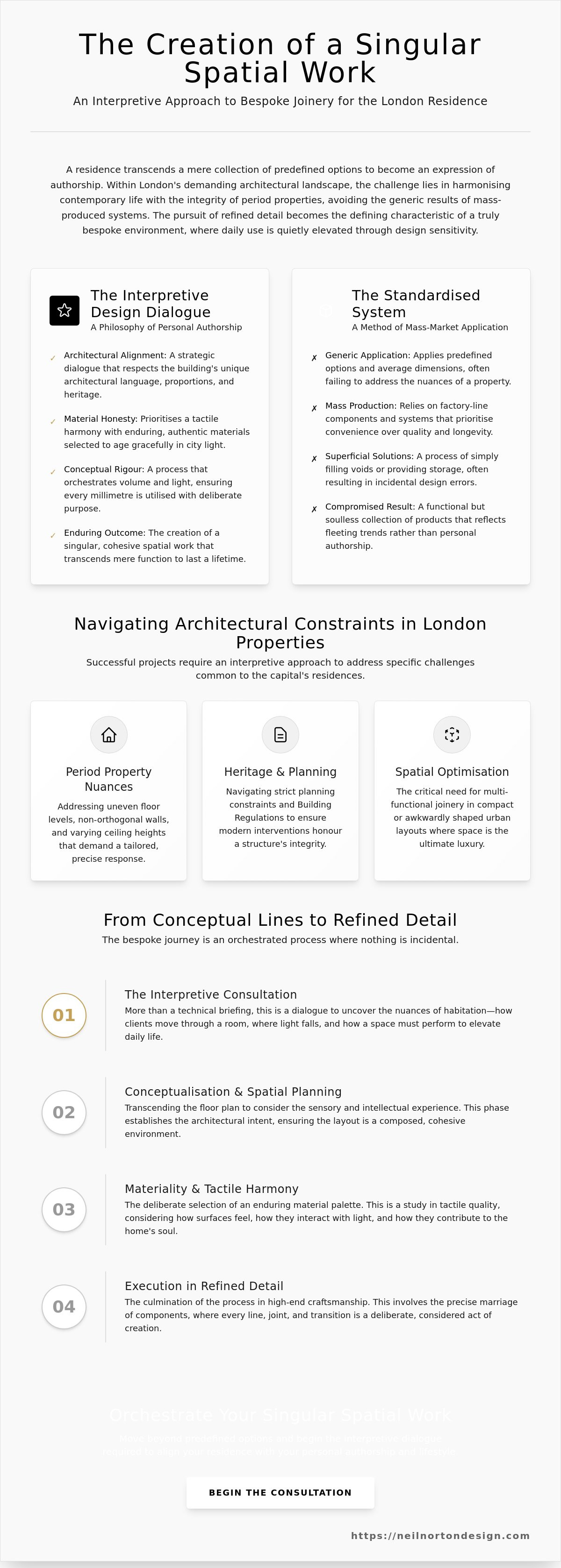
In the high-value urban context of the capital, the bespoke joinery design advice London homeowners seek must transcend simple measurements. It represents the strategic alignment of a building's unique architectural language with the nuanced demands of contemporary life. Whether inhabiting a grand Victorian terrace in Kensington or a modern mews house in Marylebone, the interior must speak fluently to the shell that contains it. In these dense environments, space is the ultimate luxury. Consequently, nothing is incidental. Planning joinery becomes a task of orchestrating volume and light rather than merely filling voids. Intentional design serves as the essential antidote to the generic, mass-market refurbishments that often strip a property of its soul. Successful projects often address several specific architectural constraints:
Uneven floor levels and non-orthogonal walls common in period properties.
Strict planning constraints and Building Regulations regarding heritage structures.
The critical need for multi-functional spaces in compact or awkwardly shaped urban layouts.
Respecting Heritage through Material Honesty
London period homes possess specific proportions that demand respect. Introducing modern functionality into a 19th-century drawing room requires an interpretive approach to spatial planning that doesn't compromise the room's original rhythm. It's about maintaining material honesty. If a structure was built with weight and permanence, new interventions should feel equally considered. Understanding What is Bespoke Joinery? clarifies that this craft is distinct from general carpentry. It involves the precise marriage of timber components to create seamless, enduring structures that honour the original building's integrity. In constrained city layouts, every junction must be handled with sensitivity to ensure the transition between old and new feels like a natural evolution.
The Rejection of Predefined Options
Off-the-shelf systems rarely succeed in elevating the daily experience of a singular spatial work. They're built for averages, but London homes are anything but average. They feature uneven walls, unexpected alcoves, and varying ceiling heights that require a tailored response. Choosing bespoke solutions allows for a level of personal authorship that mass-market convenience can't replicate. It ensures that a home isn't just a place to store belongings, but a composed environment where daily use is quietly elevated. Seeking advice that prioritises this level of detail is vital for those who value longevity over fleeting trends. Architectural intent is the deliberate choice of every line, joint, and transition. When predefined options are rejected, the choice is made to invest in detail that reflects individual aesthetic standards rather than those of a factory production line.
The Interpretive Design Consultation: Beyond Standardised Joinery Systems
The initial meeting is far more than a technical briefing; it serves as a transformative catalyst for lifestyle improvement. The most effective bespoke joinery design advice London experts offer focuses on shifting the narrative from simple storage to the creation of a singular spatial work. This interpretive dialogue allows a trusted advisor to navigate the specific nuances of domestic architecture. A professional session identifies the tactile harmony required to make a residence feel cohesive and intentional. In a city where square footage is at a premium, this conceptual rigour ensures that every millimetre is utilised with purpose.
Every interaction with a space is an opportunity for design sensitivity. A professional session uncovers how inhabitants move through a room, where the light falls at midday, and how a handle feels under the palm. It's about orchestrating an environment where daily use is quietly elevated. By treating the project as a work of art rather than a system to be applied, the designer ensures that personal authorship is visible in every corner. This approach builds immediate trust, as it prioritises unique requirements over the limitations of mass-produced furniture components.
Conceptualising Residential Interior Layouts
A successful layout transcends the two-dimensional constraints of a floor plan; it considers the sensory and intellectual experience of the space. During the conceptual phase, the pursuit of refined detail is paramount. This rigour helps avoid incidental design errors that often plague standardised renovations. When a functional room is transformed into an expression of authorship, the environment resonates with specific values. This level of intentionality ensures that every line and junction serves a purpose within the broader architectural language of the home. It's a process of refinement that turns a house into a curated sanctuary.
The Artist-Designer Perspective
The most critical investment in any renovation lifecycle is the consultation phase. It requires a unique blend of technical precision and a creative, personal vision. An artist-designer doesn't just solve a storage problem; they compose a vision for a London residence that lasts a lifetime. This approach is particularly vital when considering high-traffic areas. For instance, a Bespoke Kitchen Design: An Interpretive Approach to Architectural Luxury demonstrates how joinery can become the primary architectural feature of a home.
This perspective allows for the seamless integration of AV cabinets, home offices, and wardrobes into a unified whole. To explore how visionary concepts are transformed into tangible reality, one might examine the Neil Norton Design approach to custom-made furniture.
Materiality and Tactile Harmony: Selecting an Enduring London Palette
Materiality is the physical manifestation of architectural intent. In the capital, the often diffuse and soft quality of natural light dictates a specific approach to selecting interior textures. Understanding material honesty is vital. It involves choosing authentic materials that don't merely mimic quality but possess it inherently. When you seek the bespoke joinery design advice London residences require, the focus must remain on how timbers, stones, and metals age gracefully over decades. A walnut wardrobe or a hand-finished bar should develop a rich patina that tells the story of the home. This commitment to authenticity ensures a classic design that lasts a lifetime, standing firm against the transience of fleeting interior trends.
In the intimate settings of a London home, every surface is experienced closely. Tactile harmony becomes as important as visual appeal. The way a hand-turned handle feels or how a stone surface meets a timber gable determines the sensory success of a space. This is the pursuit of refined detail at its most visceral level. By selecting a palette that reflects the building's own architectural language, you create a singular spatial work where nothing is incidental. Every choice is a deliberate step toward an environment that transcends simple function to become a true expression of authorship.
The Pursuit of Refined Detail in Materials
The junction where two materials meet is the most important line in a bespoke room. It's here that design sensitivity is truly tested. Whether it's the crisp transition between a brass inlay and a dark oak cabinet or the soft meeting of stone and wood, these junctions must be intentional. Selecting materials that speak the same language as the building's original shell allows for a cohesive aesthetic. This sensory experience is crafted through the deliberate selection of tactile surfaces that invite touch and interaction. In a high-value urban context, these details define the prestige of the renovation.
Longevity and the Bespoke Value Proposition
Bespoke elements such as AV cabinets, home offices, and bars are far more than mere furniture. They function as permanent architectural fixtures that anchor a room's layout. This is the heart of the bespoke value proposition. Investing in high-quality materiality ensures that these custom-made pieces remain relevant and beautiful for generations. For those looking to integrate these elements seamlessly, understanding Fitted Furniture: An Architectural Approach to Bespoke Spatial Design is an essential next step. Choosing custom-made solutions over predefined options provides an environmental and aesthetic value that mass-produced systems simply cannot replicate. It's a commitment to durability, precision, and the enduring beauty of handcrafted detail.
Orchestrating the Renovation: From Conceptual Lines to Refined Detail
Renovation is not merely an exercise in procurement; it is a deliberate movement from conceptual lines to refined detail. Orchestrating this process requires a departure from systematic checklists in favour of an architectural journey. The first step involves an interpretive audit of the existing architectural shell. You must observe the proportions and light of your London home before a single drawing is produced. This allows you to define your authorship goals. Ask yourself how the home should feel and behave during your daily rituals. Once these goals are clear, a professional design consultation sets the conceptual framework. This is where the bespoke joinery design advice London homeowners depend upon becomes a roadmap for the entire project.
Effective orchestration means aligning your resource allocation with the pursuit of refined detail in high-impact zones. Before any work begins on-site, you should review the intentionality of every transition. Every material junction must be deliberate; every line must serve the broader vision. This rigour ensures that the final result is a cohesive spatial work rather than a fragmented collection of storage units. It's about maintaining control over the narrative of your home from the first sketch to the final installation.
Budgeting as Resource Allocation for Quality
Renovation costs should be viewed through the lens of enduring quality rather than mere expense. It's a strategic investment in your lifestyle. Prioritising bespoke elements that elevate daily use, such as kitchens and fitted wardrobes, ensures that your budget is working where it matters most. In the London market, a high degree of design sensitivity often yields a more substantial return on investment than the mere addition of square footage. Focusing on the Luxury Kitchen Design: An Architectural Approach to Bespoke Culinary Spaces allows you to anchor the home's value in superior craftsmanship and intentional layout.
Managing the London Planning Landscape
Navigating the delicate balance of conservation areas and modern bespoke interventions requires a seasoned expert. London's planning landscape is complex, particularly when dealing with heritage structures. Intentional documentation during the planning phase is vital to ensure architectural integrity is maintained. This documentation acts as a bridge between your creative vision and the regulatory requirements of the capital. If you're ready to transform your residence into a singular spatial work, you can book a design consultation with our studio to begin your interpretive journey.
The Neil Norton Philosophy: Creation of a Singular Spatial Work
At Neil Norton Design, we believe that a home is more than a mere structure. It is an evolving expression of those who reside within it. Our philosophy is rooted in the creation of classic design that lasts a lifetime. We don't view joinery as a series of furniture add-ons; instead, we see it as an integral architectural component that defines the volume and flow of a room. This perspective is the foundation of the bespoke joinery design advice London clients receive when they enter our studio. Whether we are crafting bespoke kitchens, home offices, or wardrobes, our goal is to ensure these elements transcend function to become art. By treating every project as a singular spatial work, we guarantee that every joint and junction is intentional.
Our unique geographic pairing of London and Ireland allows us to bring a broad operational scale to every residential project. This dual identity combines the deep-rooted tradition of Irish craftsmanship with the sophisticated architectural language required for the capital's most prestigious postcodes. It provides us with the robust resources to manage complex renovations whilst maintaining the personal touch of a boutique studio. This scale is what allows us to transform a visionary concept into a tangible reality that respects both heritage constraints and modern lifestyle needs. We act as your trusted advisor, ensuring the pursuit of refined detail is never compromised throughout the entire design journey.
A Legacy of Singular Spatial Works
We carry a quiet confidence born from successfully navigating over 200 projects for happy clients. As an award-winning studio, we specialise in the seamless integration of complex elements like AV cabinets and bars into a cohesive architectural language. Every line, joint, and transition is deliberate, ensuring that the new interventions feel like a natural extension of the building's shell. For those seeking to refine their private sanctuaries, a Fitted Wardrobe Design Consultation London: An Architectural Approach to Bespoke Storage offers a deeper look into how we align storage with spatial proportion. We ensure that your home behaves exactly as you intended, reflecting your personal authorship in every detail.
Commencing Your Renovation Journey
The transition from conceptual browsing to professional design engagement should be seamless and reassuring. High-end domestic architecture in Wimbledon and across the city requires a personal and artistic approach that mass-market systems simply cannot provide. You deserve a home where daily use is quietly elevated through design sensitivity and material honesty. We invite you to begin a dedicated architectural dialogue that will transform your residence into a composed sanctuary. To take the first step toward your singular spatial work, you may enquire about a professional design consultation for your London residence today.
Elevate Your Residence with Architectural Intent
Mastering the nuances of a London residential renovation requires more than just functional planning. It demands a deep respect for the unique architectural language of your building and a steadfast commitment to material honesty. By prioritising tactile harmony over generic storage systems, you ensure your home becomes a singular spatial work that reflects your personal authorship. This interpretive approach turns every line, joint, and transition into a deliberate design choice that quietly elevates your daily experience. It's about moving beyond the application of a system to create an environment that truly resonates with your aesthetic values.
This design philosophy can also be applied to the exterior of the property; for an example of how bespoke, low-maintenance landscapes are designed to complement a home’s architectural intent, you can learn more about Nu Scape Designs.
When you seek the bespoke joinery design advice London homeowners trust, you're choosing a partner dedicated to classic design that lasts a lifetime. As an award-winning bespoke studio specialising in both period and modern residences, Neil Norton Design has successfully transformed hundreds of properties. With a legacy of over 200 happy clients, we understand how to navigate the complexities of city living whilst ensuring every detail is refined. Transform your living space with an expert design consultation and begin the journey toward a home that transcends function. We're ready to help you compose a sanctuary that is as unique as your vision.
Frequently Asked Questions
What is the first step in a London bespoke joinery project?
The first step is an interpretive audit of the existing architectural shell to understand proportions and natural light. This phase allows you to define your authorship goals before any technical drawings are produced. Engaging with an expert ensures the conceptual framework respects the building's original rhythm. It sets the stage for a renovation where every line and junction is intentional rather than incidental.
How much does a professional interior design consultation cost in London?
Professional fees for a design consultation depend on the complexity of the spatial work and the level of technical documentation required. Whilst some consultants offer fixed-room packages, others work on a percentage of the total project value. It's best to discuss your specific requirements during an initial briefing to understand the investment needed for a truly bespoke outcome that reflects your authorship goals.
Do I need an architect or a bespoke joinery consultant for my renovation?
An architect often manages the structural shell, whilst a bespoke joinery consultant focuses on the tactile harmony and functional artistry of the interior. Many successful projects involve both professionals working in tandem to ensure the architectural language remains cohesive. A consultant provides the specific bespoke joinery design advice London homeowners need to transform storage requirements into singular spatial works that transcend simple function.
How can I maintain architectural integrity in a Victorian home renovation?
Maintaining integrity in a Victorian home requires a commitment to material honesty and a deep respect for original proportions. You should avoid mass-market systems that ignore the unique constraints of period properties, such as uneven walls or high ceilings. Instead, focus on custom-made interventions that speak the same language as the heritage structure. Every transition between the original fabric and new joinery must be deliberate and sensitive.
What are the benefits of bespoke joinery versus fitted furniture systems?
Bespoke joinery offers a rejection of predefined options, allowing for a level of personal authorship that modular systems cannot replicate. Fitted furniture systems often fail to address the specific architectural nuances of London residences, leading to generic results. Bespoke solutions are designed to fit the exact contours of your space, ensuring that daily use is quietly elevated through design sensitivity and superior craftsmanship.
How long does a typical high-end London renovation take to plan?
Planning a high-end renovation in the capital typically requires three to six months. This duration allows for a thorough interpretive design consultation, material selection, and the navigation of complex planning constraints. Given the intricacies of London properties, rushing this phase can lead to incidental design errors. A steady, methodical pace ensures the final execution reflects a cohesive and intentional vision for your home.
What is material honesty in the context of London interior design?
Material honesty refers to the use of authentic materials that age gracefully and possess inherent quality. In London interior design, this means choosing real timbers, stones, and metals that develop a rich patina over time. It's the rejection of materials that mimic others, ensuring that your home feels grounded and permanent. This approach anchors the property's value in durability and the enduring beauty of handcrafted detail.
Can I renovate my London home whilst living in it?
Living in your home during a renovation is possible, though it requires careful orchestration and a phased approach. Because high-end bespoke joinery is manufactured off-site in a specialist workshop, the time spent on-site for installation is significantly reduced. This minimizes disruption to your daily rituals. However, for larger structural works, many residents choose to vacate briefly to ensure the pursuit of refined detail can proceed without compromise.


Comments