The Art of Spatial Authorship: Professional Fitted Furniture Design Service in London
- Neil Norton Design

- Jun 24
- 12 min read
Updated: 7 hours ago
Most storage solutions are merely a quiet surrender to clutter, a functional afterthought that ignores the unique architectural language of your home. You've likely felt the frustration of generic, system-based furniture that doesn't respect the delicate proportions of a period alcove or the specific flow of your living space. When you seek a professional fitted furniture design service London offers many options, yet few understand that cabinetry should be an interpretive architectural intervention. It's not just about finding a place for your belongings; it's about the creation of a singular spatial work that reflects your personal authorship.
This article explores how an intentional approach to design elevates daily use through sensitivity to materiality and proportion. You'll learn how bespoke wardrobes, kitchens, and home offices can achieve a rare tactile harmony with your existing architecture. We'll examine why every line, joint, and transition must be deliberate to ensure your furniture isn't just a purchase, but a classic investment that lasts a lifetime. Prepare to see your home not as a collection of rooms, but as a cohesive environment where nothing is incidental.
Table of Contents
Beyond Utility: The Role of Architectural Fitted Furniture in London Residences
The Interpretive Design Process: Materiality and Tactile Harmony
The Distinction Between Authorship and Systematic Application
Navigating the Professional Design Consultation: A Framework for London Homeowners
The Neil Norton Design Service: Elevating Daily Life Through Intentionality
Beyond Utility: The Role of Architectural Fitted Furniture in London Residences
Fitted furniture is often misunderstood as a mere solution to a storage deficit. In the context of refined London residences, it's far more than that. It should be viewed as an intentional extension of a building's internal language. A professional fitted furniture design service London homeowners trust treats the home not as a series of voids to be filled, but as a canvas for architectural expression. This approach moves beyond the utilitarian goal of "filling a gap" to create a singular spatial work where every component is integrated into the room's character. It's the difference between a cabinet that sits in a room and a cabinet that defines the room.
The history of furniture design demonstrates a shift from purely portable objects to integrated fixtures that define the very boundaries of a living space. In London, where Victorian, Georgian, and Edwardian properties present complex geometries and period nuances, this integration is vital. Standard joinery often ignores the subtle shifts in floor levels or the slight lean of a century-old wall. An interpretive design process identifies opportunities to celebrate a home's heritage rather than obscuring it. Through careful observation, a designer uncovers how a bespoke wardrobe or AV cabinet can mirror existing mouldings, ensuring a seamless visual transition. This level of intentionality is what separates authorship from mere manufacturing. It's about the pursuit of refined detail where nothing is incidental.
Transcending the Standardised Option
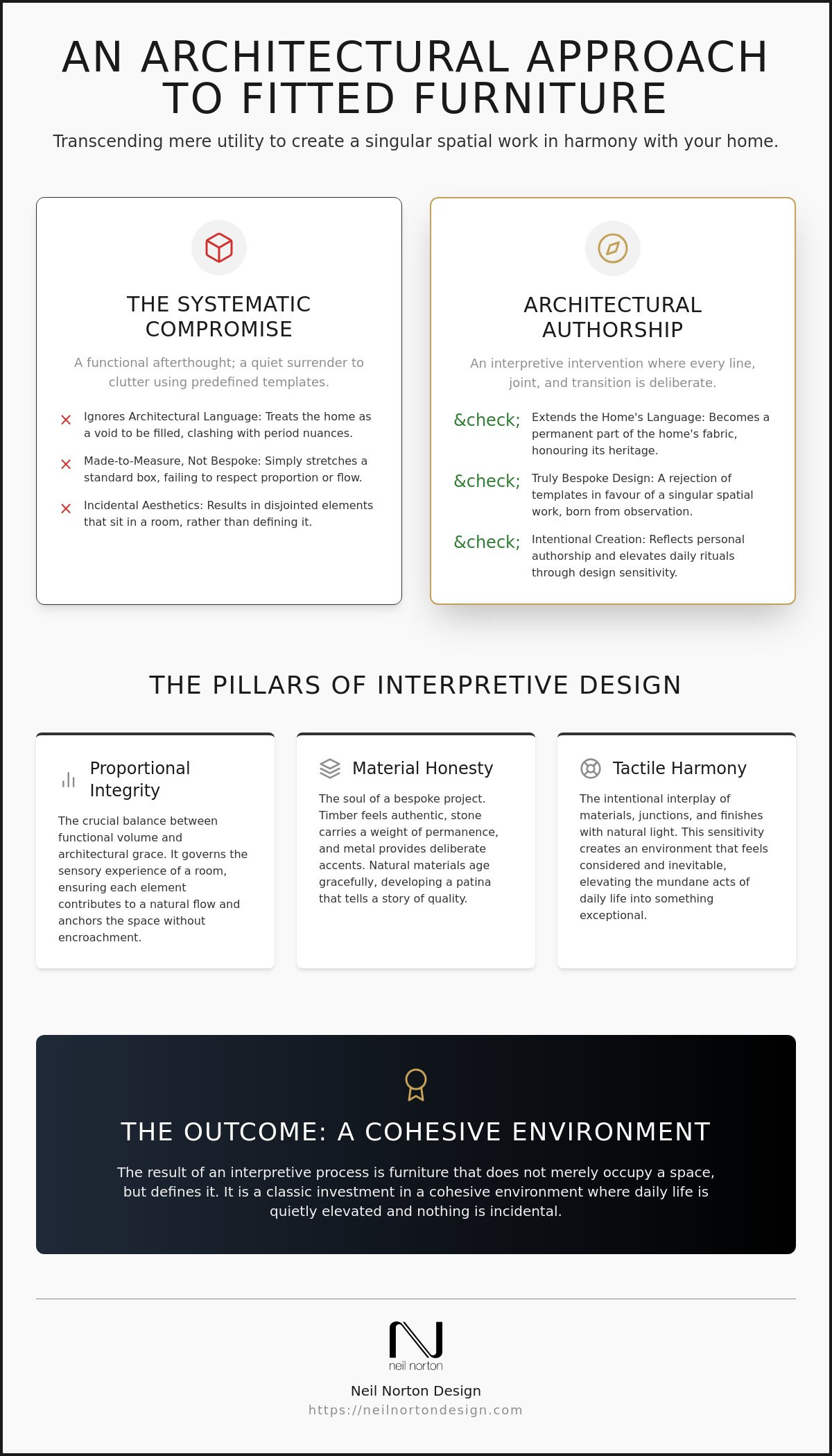
Mass-market furniture systems rely on predefined templates that frequently clash with the idiosyncratic nature of London architecture. Many providers offer "made-to-measure" services, but this is fundamentally different from bespoke design. Made-to-measure simply stretches a standard box to fit a space. True bespoke design is a rejection of incidental aesthetics. It ensures that every line, joint, and transition is deliberate, turning a wardrobe or a home office into a permanent part of the home's fabric.
The Importance of Proportional Integrity
The sensory experience of a room is governed by the height, depth, and rhythm of its elements. If a cabinet is too deep, it encroaches on the room's natural flow. If it's too shallow, it loses its presence and fails to anchor the space. Proportional integrity is the balance between functional volume and architectural grace. Achieving tactile harmony requires a deep understanding of how junctions meet and how various finishes interact with natural light to create an environment that feels inevitable.
The Interpretive Design Process: Materiality and Tactile Harmony
Choosing a professional fitted furniture design service London ensures that your home's transformation isn't just aesthetic but structural. The designer acts as a catalyst, translating your daily rituals into physical forms that resonate with the property's history. This interpretive process relies heavily on the value of a professional designer to navigate the complex intersection of beauty and utility. It's where the pursuit of refined detail begins. Every line is a choice. Every material is a statement of intent. This isn't the application of a system; it's the creation of an environment that quietly elevates your lifestyle.
Material Honesty in Bespoke Cabinetry
Materiality is the soul of any bespoke project. When we discuss fitted furniture, we aren't just talking about storage. We're talking about material honesty. Timber should feel warm and authentic, offering a connection to the natural world. Stone should carry a weight of permanence, grounding the room's composition. Metal should provide precise, deliberate accents that catch the light. These choices must be intentional. Natural textures age gracefully, developing a patina that tells a story of quality over decades. Synthetic alternatives often feel hollow and temporary. By selecting materials that resonate with the wider interior scheme, you achieve a tactile harmony that elevates the mundane acts of daily life into something exceptional.
Defining the Architectural Language of a Room
Every joint and transition within a piece of cabinetry serves as a punctuation mark in the room's architectural language. Nothing is incidental. A designer uses these elements to reinforce or subtly challenge the existing geometry of a London home. The intentional use of negative space creates a sense of lightness, preventing large installations from feeling overbearing or clumsy. Light and shadow become active design tools. They define the rhythm of a wardrobe's facade or the depth of a home office's shelving. Ensuring that every junction is deliberate creates a cohesive whole. This level of design sensitivity ensures that the furniture becomes a singular expression of authorship rather than a generic addition. It's about achieving a balance where the furniture feels as though it was always meant to be there.
If you're ready to explore how these principles can transform your own living space, the journey begins with a focus on the sensory and intellectual experience of your home.
The Distinction Between Authorship and Systematic Application
Living in a home that feels like a singular expression of your identity requires a departure from the standardised. In the crowded market of a fitted furniture design service London, the distinction between a systematic application and true authorship is profound. A system-based approach relies on templates and predefined modules that force your home to adapt to the furniture. Authorship reverses this dynamic. It treats every alcove, ceiling height, and floor transition as a unique architectural condition. This isn't just about aesthetics; it's an investment in the long-term value of a London residence. By rejecting the fallacy of "system-based" luxury, you ensure your interior achieves a level of architectural harmony that templates can't replicate.
The emotional value of authorship is found in the sensory experience of the space. There's a deep satisfaction in using a home office or wardrobe that was conceived specifically for your daily rituals by a specialist fitted furniture design service London residents trust for enduring quality. This personal connection transforms a house into a sanctuary. It’s the difference between buying a product and commissioning a work of art. When every material choice and proportion is an expression of your preferences, the resulting harmony is unmistakable. You aren't just organising your belongings; you're authoring the environment in which your life unfolds.
Refining the Details: Joint, Line, and Transition
The success of a bespoke project is found in the smallest junctions. In London's period properties, walls are rarely plumb and floors are seldom level. Marrying furniture to these uneven surfaces requires technical precision that mass-market systems simply don't possess. Every joint must be deliberate. When looking at bespoke kitchen design, you see how this interpretive approach sets a standard for the entire home. It's about ensuring nothing is incidental and every line serves a purpose, creating a cohesive visual flow that feels entirely natural within the room's existing geometry.
The Longevity of Refined Craftsmanship
True design sensitivity transcends fleeting interior trends. When furniture is created with intentionality, it becomes a permanent architectural feature rather than a temporary fixture. This foresight prevents the need for future renovations because the design is rooted in the building's own language. Adhering to the professional standards in interior design ensures that the resulting work carries a quiet confidence. Award-winning design doesn't need to shout to be noticed. It provides a sense of security and pride, knowing that your home is a singular spatial work that will last a lifetime. This commitment to longevity is the ultimate mark of luxury in a world of disposable options.
Navigating the Professional Design Consultation: A Framework for London Homeowners
The design consultation is the intellectual foundation upon which every successful bespoke project is built. It's a phase that transcends simple measurements; it's an essential exploration of your home's soul and your own lifestyle rituals. When you engage a professional fitted furniture design service London residents rely on, you're looking for a partner who understands that the "design" happens long before the first piece of timber is cut. An on-site visit is vital to this process. It allows a designer to interpret the architectural language of the property, observing how natural light interacts with the space and how existing period features dictate the room's natural rhythm.
Evaluating a designer's portfolio requires a discerning eye. You shouldn't just look for "finished looks" or pretty photographs. Instead, look for design sensitivity. Pay attention to how cabinetry junctions meet the floor or how a wardrobe's height respects the ceiling's cornicing. A high-end fitted furniture design service London offers will demonstrate a clear understanding of proportion and materiality in every project. This initial meeting is your opportunity to ensure the designer's artistic vision aligns with the architectural integrity of your home.
Identifying the Nuances of Daily Use
A truly bespoke consultation doesn't start with what you want to store; it starts with how you live. Intentionality is the guiding principle here. Whether you're planning media units, home offices, or fitted wardrobes in London, every choice must be deliberate. In a bedroom, for example, the furniture should complement the room's proportions rather than overwhelming them. We consider the sensory experience of your morning routine—the tactile response of a handle, the quiet glide of a drawer, and the way the internal layout organises your life without friction. Nothing is incidental when the goal is to quietly elevate your daily experience through design sensitivity.
The Collaborative Design Journey
The transition from conceptual sketches to technical precision is a collaborative effort. A professional consultant acts as a bridge between art and architecture, refining your personal vision into a singular spatial work. They ensure that the final design isn't just a collection of cabinets, but a cohesive environment where every line and transition is intentional. The consultation is an interpretive dialogue between client, designer, and space. It's the moment where your personal authorship begins to take physical shape, grounded in the reliability and craftsmanship of a seasoned expert.
To begin this interpretive process and define the architectural future of your home, you can book your design consultation with our team today.
The Neil Norton Design Service: Elevating Daily Life Through Intentionality
At Neil Norton Design, we believe a home's interior should be a living narrative of the people within it. Our philosophy is rooted in the conviction that every line and material choice must be deliberate. As a seasoned fitted furniture design service London residents trust, we specialise in the creation of environments where nothing is incidental. We've successfully navigated hundreds of projects, as evidenced by our 200+ happy clients who value the pursuit of refined detail above all else. This personality is grounded and deeply committed to your satisfaction. We blend technical precision with an artistic vision that transcends mere manufacturing.
The consultation phase serves as the foundation of our architectural luxury. It's during these interpretive dialogues that we uncover the nuances of your daily rituals and translate them into physical forms. Whether we're designing bespoke kitchens or home offices, our focus remains on achieving tactile harmony with your home's existing architecture. We don't just apply a system. We author a singular spatial work that reflects your unique character. This approach ensures that your furniture isn't just a purchase; it's a catalyst for lifestyle improvement and a source of enduring pride.
From Concept to Authorship
Our Wimbledon-based studio serves as the creative heart of our operations, providing localised prestige and accessibility to our London clientele. This geographic identity, paired with our presence in Ireland, gives us a distinct regional perspective and a broad operational scale. We transform residential spaces into cohesive architectural statements by ensuring that every cabinet and junction respects the property's internal language. To see how this intentionality manifests in culinary spaces, you can explore our luxury kitchen design consultations. This process offers a glimpse into how we balance functional volume with architectural grace.
Securing Your Design Legacy
A Neil Norton design is a classic investment that's built to last a lifetime. Our commitment to material honesty ensures that every timber surface and stone junction ages gracefully, telling a story of enduring quality. We reject fleeting trends in favour of timeless proportions and design sensitivity. By choosing a professional fitted furniture design service London homeowners can secure a legacy of craftsmanship within their own walls. It's about more than storage. It's about the quiet elevation of daily life through an environment that feels entirely inevitable. Contact us to begin your journey toward a home that is a true expression of your authorship.
Defining the Architectural Future of Your Home
An interpretive approach to spatial design ensures your home becomes a singular expression of authorship rather than a collection of generic modules. We've explored how materiality and proportional integrity transcend mere storage to create environments that quietly elevate daily use. By prioritising refined detail and material honesty, you invest in a classic aesthetic that lasts a lifetime. When seeking a professional fitted furniture design service London homeowners deserve a partner who understands the building's own internal language.
Our award-winning studio, based in Wimbledon, has completed over 200 bespoke projects for discerning clients. This experience allows us to bridge the gap between art and architecture with quiet confidence. Every line, joint, and transition in our work is deliberate, ensuring your cabinetry feels inevitable within its surroundings. It's time to move beyond the standardised and embrace a home that reflects your personal vision through intentional design sensitivity.
Begin your interpretive design journey with a professional consultation and discover how bespoke craftsmanship can transform your living environment. We look forward to helping you author a space that truly resonates with your lifestyle.
Frequently Asked Questions
What is the difference between fitted furniture and bespoke architectural design?
Fitted furniture often refers to the physical installation of cabinetry, whilst bespoke architectural design is an interpretive methodology that treats furniture as an extension of a building's internal language. This approach ensures that every line and transition is intentional rather than incidental. It transcends the simple application of a storage system to create a singular spatial work that reflects your personal authorship.
How does a professional design consultation improve the outcome of my project?
A professional design consultation serves as the intellectual foundation for your project by translating your daily rituals into physical forms. A designer identifies architectural opportunities that standard joinery often overlooks, such as the play of light or the rhythm of existing mouldings. This collaborative journey ensures the final design is a cohesive architectural statement that quietly elevates your lifestyle.
Can bespoke fitted furniture be integrated into London period properties with uneven walls?
Bespoke integration is the only effective solution for the idiosyncratic geometries and uneven surfaces found in London's period properties. A professional fitted furniture design service London homeowners trust will use technical precision to marry cabinetry to century-old walls and floors. This ensures a seamless transition that respects the heritage and architectural language of your home without the need for clumsy fillers.
What materials are best suited for high-end fitted furniture in a London home?
High-end furniture relies on material honesty, favouring natural textures like sustainably sourced timber, stone, and metal accents. These materials age gracefully, developing a patina that reflects enduring quality over decades. We avoid synthetic alternatives to ensure your furniture achieves a tactile harmony with the existing interior scheme, creating a sensory experience that feels authentic and grounded.
How long does the professional design consultation process typically take?
The duration of the consultation phase depends on the complexity of your vision and the specific architectural nuances of your property. It begins with an interpretive dialogue to understand your lifestyle and concludes only when every line and material choice is deliberate. This methodical pace ensures the final design is a classic investment that lasts a lifetime rather than a rushed, temporary fixture.
Why is proportion more important than just maximising storage in furniture design?
Proportion governs the sensory experience of a room, whereas merely maximising storage can often overwhelm the space and disrupt its flow. Proportional integrity maintains the balance between functional volume and architectural grace. It ensures your furniture anchors the room and provides necessary utility without encroaching on the natural rhythm or light of the environment.
Do you provide design services for home offices and AV cabinets as well as kitchens?
We specialise in a comprehensive suite of bespoke solutions beyond kitchens, including home offices, wardrobes, bars, and AV cabinets. Each project is treated with the same design sensitivity and commitment to refined detail. This ensures a consistent architectural language is maintained throughout your residence, where nothing is incidental and every room feels like part of a cohesive whole.
How do I prepare for my first design consultation with Neil Norton Design?
Preparing for your consultation involves observing the nuances of your daily use rather than just listing storage requirements. Think about the materiality you prefer and how you want the finished environment to feel on a sensory level. Bringing these initial thoughts to our Wimbledon studio allows us to begin the collaborative process of refining your vision into a singular spatial work.


Comments